Fashion Illustration is an important part of the process in designing your own fashions and garments or even working out how to sew a pattern. Problem is, not everybody can draw and yes, I know, I’ve taken beginner drawing classes before and they all say “everybody can draw” and that’s very true. However, the human body including draped and folded fabric are really not the easiest subjects to begin with if you are just starting out.
I was reading a post by Tulle and Tweed, which discussed the importance of being able to sketch your fashion and sewing projects and ideas and I agree wholeheartedly. It ignites the creative process, allows you to solidify and expand on anything you have dreamed up, or can even help to solve a problem you’ve had with putting things together. But, I noticed from the comments that many people were afraid to attempt illustrating since they were not artists and felt they could not draw. Present company included in this sentiment.
I’d love to be able to just quickly sketch out an idea and have it look realistic and fabulous, but, let’s face it, a wee bit of practice and instruction may be necessary for the non-artist. I just purchased a book that has been very helpful in this regard. It is “The Manga Artist’s Workbook” by Christopher Hart.

Drawing the Figure
It is an instruction book, sketchbook and tracing book all in one. And it is small enough to pack into any size bag to tote along with you, so you always have it should inspiration strike. It is really a guide on how to draw Manga characters, but the basic techniques are the same for fashion illustration and figures.

Instructions on How to Draw Figure Head
There are sections for how to draw the head, face and hair and sections on how to draw the body in various positions and stances, including proportion and angles.

Clothing on Figure
These figures are called croquis in fashion illustration. The end of the book shows clothed characters and how to illustrate garments on your figure.
Included are blank graphed pages so that you can try your hand at what you’ve just learned, using the squares of the graph paper to help you plot out the image. As well, Tracing paper is overlain on some pages so that you can trace the image or even use the page as a guide and draw clothing or accessories over the image.
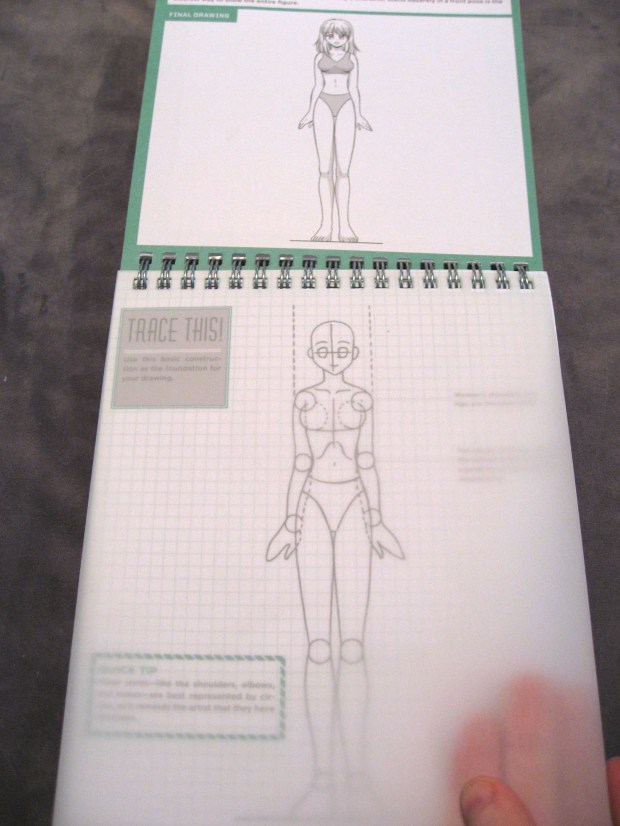
Tracing Paper Overlay
I also customized my copy of the book. I added copies of figures and poses and clothing from other sources on some of the blank graphed pages in order to copy these for practice and use them as a starting point for ideas. The following illustrations were taken from The Encyclopedia of Fashion Illustration Techniques by Carol A. Nunnelly and added to the sketchbook.

Customized Page with Added Clothed Croquis Drawings

Customized Page with Added Clothed Croquis Drawings
In addition to this, I added some tracing paper overlays to pages that did not have any, so that I could either trace the image or add my clothing ideas over top of the image.
I am much more confident now in trying my hand at fashion illustration and figure drawing with the help of this book. I can still use it like a sketchbook to illustrate ideas but I also have all these guidelines, instructions and tools included, so that I don’t feel too intimidated to go ahead and begin drawing, sketching and illustrating.

Customized Page with Added Croquis Pictures and Added Tracing Paper Overlay



 Since the material is thin, the larger satin stitches I tried on it made it pucker too much. I have since bought water-soluble backing to use in future machine embroidery projects to see if that makes a difference.
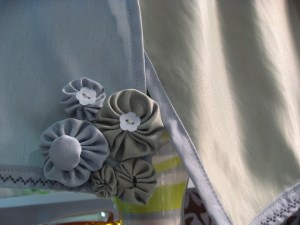 On the opposite sides of the yo-yo’s, I attached some coordinating buttons. This was to provide some stability as well as disguise the thread used to attach the yo-yos to the scarf. I wasn’t sure how else to do this, so I chose the buttons. If you know of an alternative method, please let me know.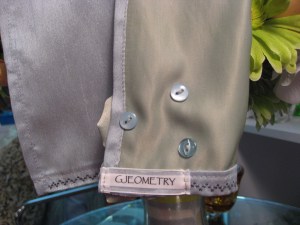


 Gjeometry